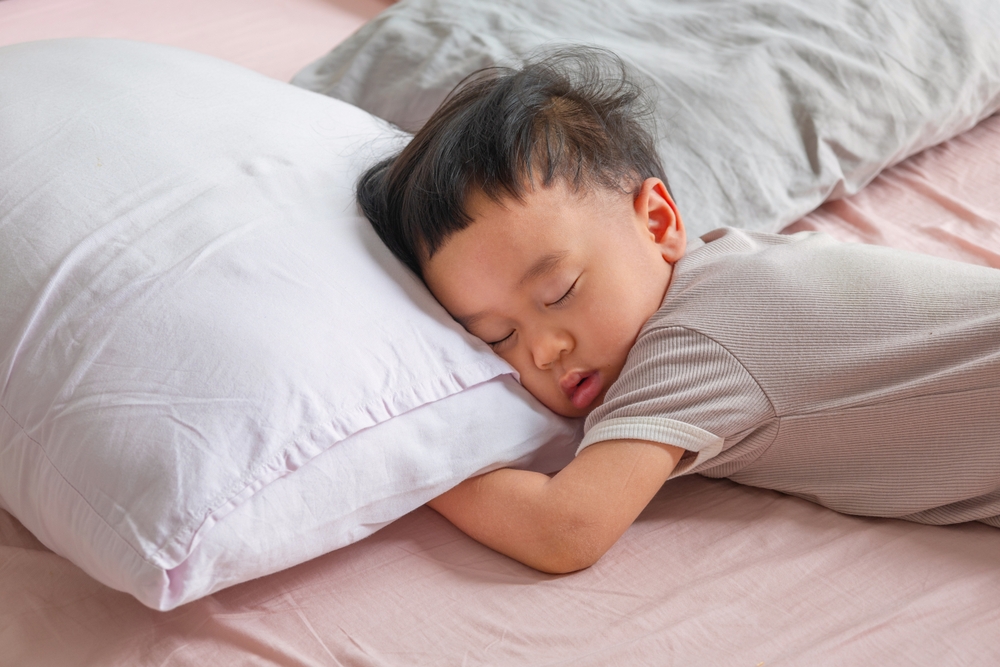
Children require more sleep than adults, and the amount of sleep needed varies significantly depending on their age. Parents must systematically manage and nurture these essential sleep habits from a young age to build a strong foundation for their health and overall lifestyle. Getting adequate sleep offers numerous benefits, including physical growth, improved cognitive abilities, development, and better emotional regulation. Therefore, to ensure children reach their full physical and mental potential and maintain a robust immune system, please read until the end to learn about healthy sleep habits.

Correct Sleep Practices
To ensure children get quality sleep, it is necessary to have a consistent bedtime and a set of good pre-sleep routines. For example, practices such as taking a warm bath, reading a book, or dimming the room lights help the body transition from daily activities to a state of rest. Having these regular bedtime routines helps a child’s brain sense that it is time to rest, making it easier to fall into a deep sleep and reducing nighttime awakenings. Maintaining these regular schedules and habits even on weekends helps regulate the body’s internal biological clock.

Sleep Duration by Age
As children grow and their brains develop, their sleep requirements change. Based on age groups, the required sleep durations according to an article from Children’s Health Queensland are as follows:
- Infants (4 months to 1 year): 12 to 16 hours
- Toddlers (1 to 2 years): 11 to 14 hours
- Preschoolers (3 to 5 years): 10 to 13 hours
- School-aged children (6 to 12 years): 9 to 11 hours
- Teenagers (13 to 18 years): 8 to 10 hours
Getting full sleep according to these durations is linked to better focus and emotional stability.

A Disturbance-Free Environment
For both adults and children to sleep well, the environment should be quiet, dimly lit, and cool. Most importantly, electronic devices such as phones and tablets should not be kept near the bed at least one hour before bedtime. According to an article from the Sleep Foundation, the blue light emitted from these screens suppresses melatonin, the hormone responsible for sleep, making it difficult for children to fall asleep. Therefore, parents should manage and encourage children to avoid looking at screens before bed as much as possible.
In conclusion, to achieve healthy and adequate sleep, it is vital to practice correct pre-sleep routines, ensure a quiet and comfortable environment, and avoid the habit of using phones before bed. By following these steps along with your children, you will surely achieve a healthy and well-rested lifestyle.





Comments