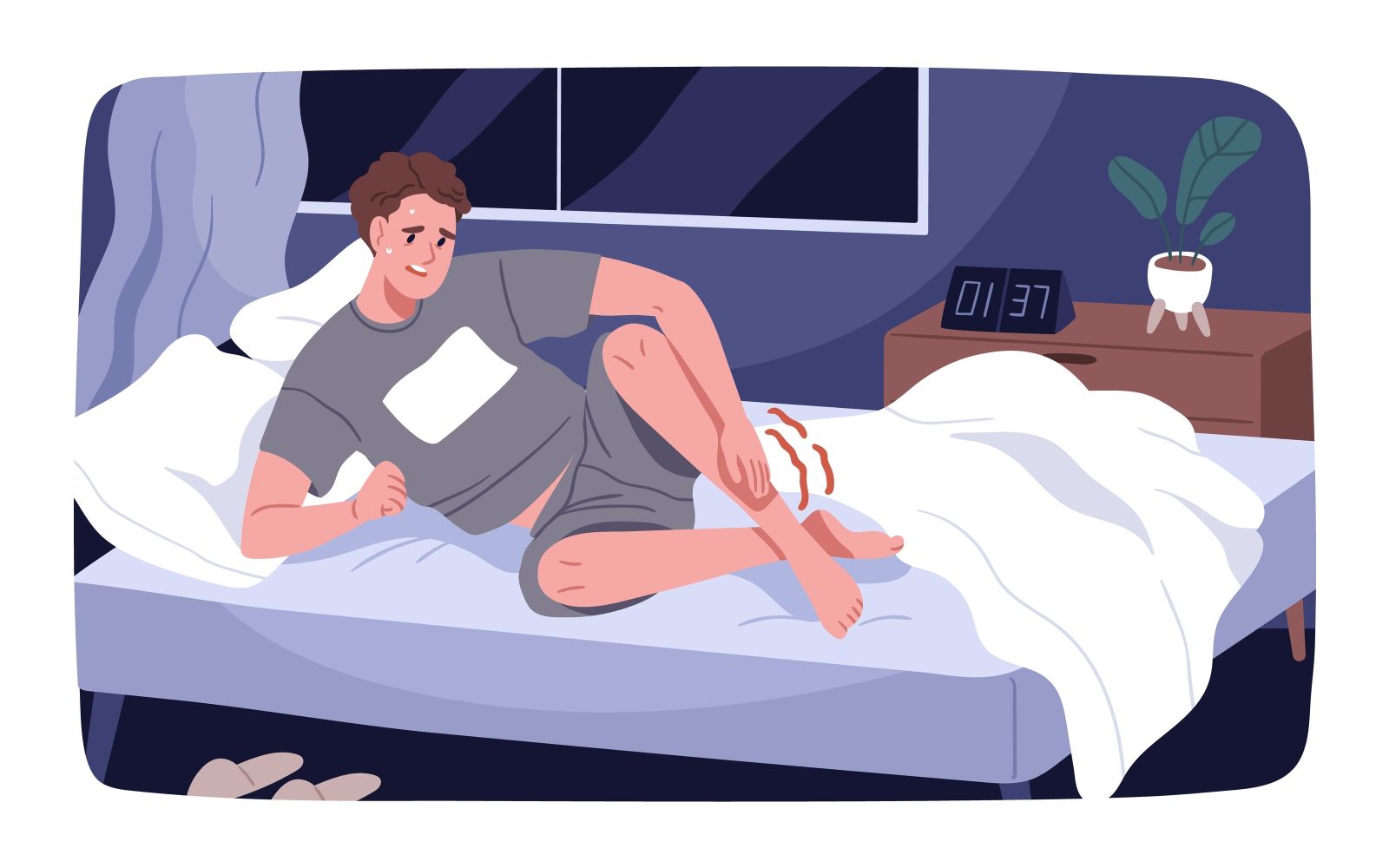
Have you ever woken up suddenly because of a painful leg cramp? Nighttime leg cramps are common and can happen when the muscles in your legs suddenly tighten and become difficult to relax.
Most of the time, they are harmless. However, frequent or severe cramps can sometimes be linked to another health problem.
Common Causes of Nighttime Leg Cramps
Leg cramps can happen for several reasons, including:
- Dehydration – Not drinking enough fluids may contribute to muscle cramps.
- Overuse or tired muscles – Standing, walking, or exercising for long periods can put extra stress on your muscles.
- Long periods of sitting – Staying in one position for too long may increase the chance of cramps.
- Pregnancy and aging – Leg cramps can become more common during pregnancy and as we get older.
- Certain medicines – Some medications may cause muscle cramps as a side effect.
- Low levels of certain nutrients – In some cases, an imbalance of minerals such as potassium, calcium, or magnesium may contribute to muscle problems.
When Should You Be Concerned?
Occasional leg cramps are usually not a reason to worry. But it is a good idea to talk to a healthcare professional if your cramps:
- Happen very often or are becoming more severe
- Regularly disturb your sleep
- Come with leg swelling, weakness, numbness, or changes in skin color
- Last for a long time or do not improve with simple measures
- Started after taking a new medicine
Sudden leg pain with swelling, warmth, or redness—especially in one leg—can sometimes be a sign of a blood clot and needs urgent medical attention. If leg symptoms occur together with chest pain, trouble breathing, or coughing up blood, seek emergency medical care immediately.
What Can You Do?
When a cramp happens, gently stretch and massage the affected muscle. Staying well hydrated and doing regular gentle stretches, especially before bed, may also help reduce cramps.
Final Thoughts
Nighttime leg cramps are often harmless, but frequent, severe, or unusual symptoms should not be ignored. Paying attention to your body and seeking medical advice when needed can help identify the cause and keep your legs healthy.

Comments