
When people communicate with one another, spoken words are the primary form of communication, but there are also sign languages that allow people to communicate without sound. Developed for the deaf and hard of hearing, sign languages are a type of language that uses hand shapes, facial expressions, and body movements to express complex feelings and thoughts. However, unlike spoken languages, many people may not realize that sign languages are not universal and vary from country to country and culture to culture. Let's read on in this article to find out how many sign languages exist around the world by country, and what kind of sign language is used in Myanmar.
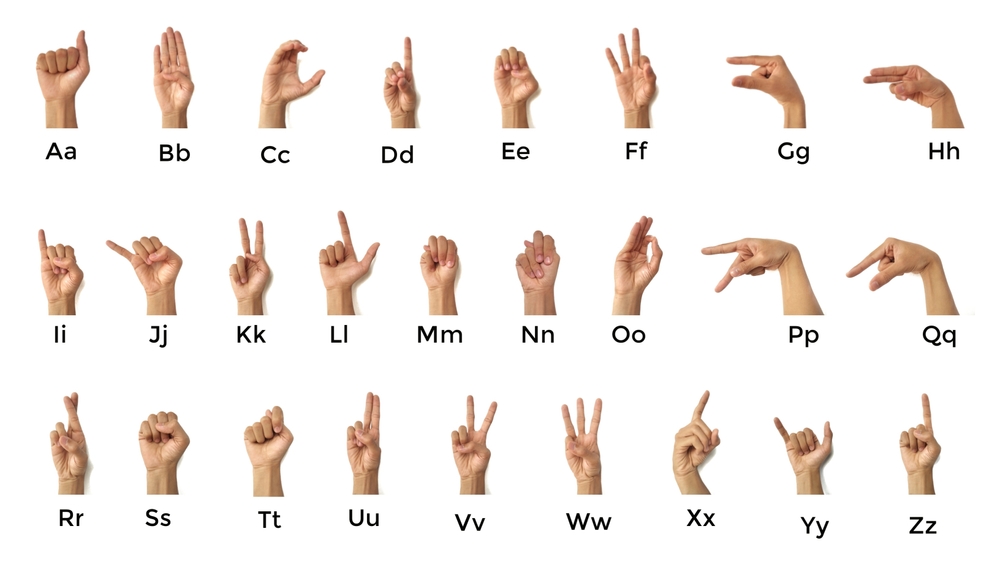
How Sign Languages Differ by Country
Although there is an International Sign (IS) used at global events, sign language is not a universal language as many might think. According to an article by ASL Bloom, each country's sign language has various differences:
- Different grammar systems and sentence structures.
- Variations based on culture and history.

Some of the Most Widely Used Sign Languages in the World
American Sign Language (ASL): Widely used in the United States and Canada, ASL is currently one of the most popular sign languages in the world.
British Sign Language (BSL): Used in the UK, Australia, and New Zealand, BSL differs from ASL in that it often uses both hands to spell out the alphabet.
French Sign Language (LSF): Holding historical significance, French Sign Language can be considered the foundation for sign languages in many countries, including ASL.

How Sign Languages Can Be Learned
Children born to deaf parents easily acquire sign language as their native tongue, having seen and learned it from a young age. In addition to hand shape movements, emotions are expressed through raising eyebrows, nodding the head, and mouth movements.
In Myanmar, key institutions for the development of sign language have included the Mary Chapman School for the Deaf in Yangon (established in 1920), as well as schools for deaf children in Mandalay and Kalay. Because of regional differences, some of the signs used across these locations can vary. Nowadays, through local organizations and training centers, Myanmar Sign Language is being standardized, taught, and made easier for people to learn.
Despite these diverse differences, humanity's mutual desire to understand and ability to connect allows people from different regions to adapt and communicate swiftly. Therefore, even without spoken sound, sign languages are arguably one of the most beautiful languages reflecting human communicative capability.





Comments