The world is gradually submerging under mountains of single-use items and fast-paced, ever-changing fashion trends, and our traditional methods of handling waste are no longer sufficient. For the past few decades, we have heavily relied on the standard "Reduce, Reuse, Recycle" framework. Today, however, we are moving toward a new approach that blends artistry with sustainability to truly elevate the value of discarded materials. This process is known as "Upcycling."
While people often use the terms "Recycling" and "Upcycling" interchangeably, they represent significantly different approaches from an environmental standpoint.
- Traditional Recycling (Downcycling): This process breaks down plastic items like water bottles, metals like aluminum cans, or old paper by chemically decomposing, melting, or shredding them to rebuild something entirely from scratch. These methods demand a massive amount of energy, and the resulting materials often undergo a reduction in quality.
- Upcycling (Value Elevation): Upcycling completely skips the initial destructive phase of traditional recycling. Instead, creativity takes center stage. Artisans and designers intercept existing waste materials and transform them directly into beautiful, functional products. An old rubber tire can become a premium wallet, and an empty bottle can turn into an elegant glassware piece. This preservation and elevation of material value is the greatest benefit of upcycling.
A Massive Leap for the Environment
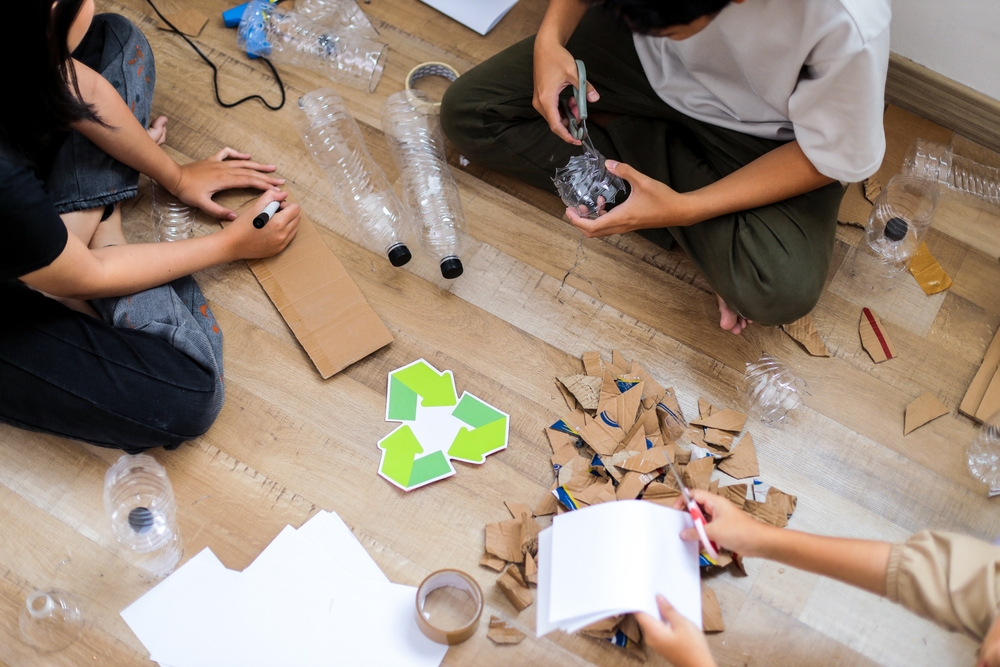
Every time an item is upcycled, it delivers a dual benefit to the planet simultaneously:
- It diverts a product away from landfills where it would otherwise sit for centuries, while also eliminating the energy required for incineration and reducing carbon dioxide emissions.
- It completely removes the need for new raw materials, energy, and production costs that would typically be required to manufacture a brand-new item, ultimately uplifting both the environment and the socio-economy.
Upcycling in Myanmar
While upcycling movements are gaining momentum globally, Myanmar is also witnessing its own innovative and artistic upcycling initiatives. A prominent example is Hla Day, a local social enterprise. Hla Day collaborates closely with small-scale independent artisans who transform discarded waste into beautiful, innovative lifestyle products.
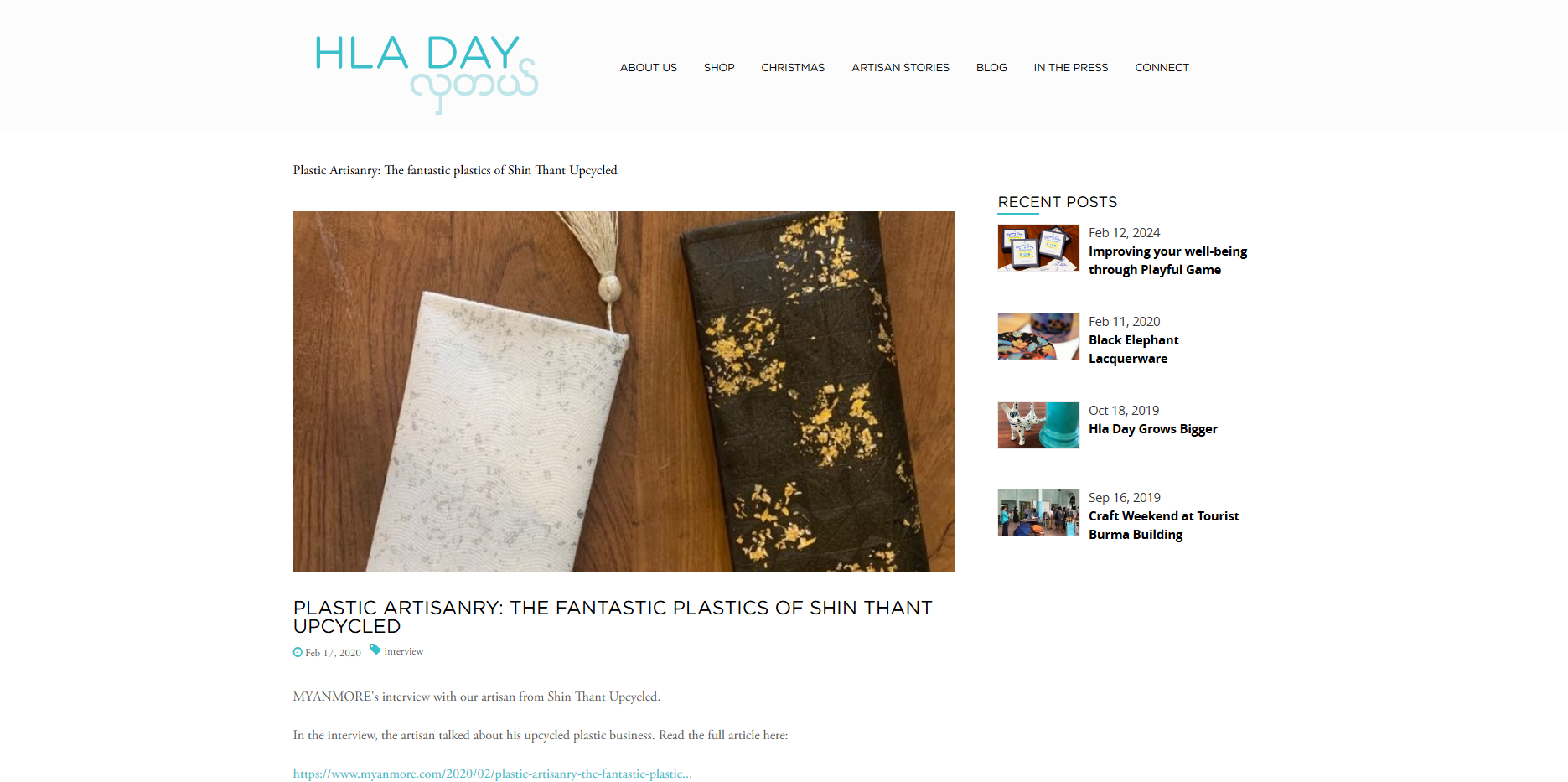
Here is how these Myanmar artisans are breathing new life into urban waste:
1. The Fused Plastic Process
Single-use plastic bags present a severe environmental headache for local waterways. To tackle this, artisans collect discarded low-density polyethylene (LDPE) packaging, clean it thoroughly, and sort it by color. They then layer these plastic bags together under a carefully controlled temperature. The result is not a melted pile of plastic, but a thick, durable, waterproof sheets of beautiful material. These sheets are then tailored into sturdy shopping totes, travel pouches, and decorative accessories.
2. Tough-Grade Rubber Engineering
Punctured inner tubes and industrial rubber waste are incredibly resilient, so much so that they will practically never decompose in a landfill. In the upcycling process, these tough rubbers are sanitized, cut, and re-engineered. Capitalizing on the material's natural waterproof and heavy-duty properties, artisans fashion them into functional items like laptop sleeves and passport holders.
3. Artisanal Glass Blowing
Instead of letting used glass bottles pile up in dumpsites, artisans purchase them through a network of local waste collectors. The bottles are crushed into cullet and melted down in specialized, high-temperature furnaces. Master craftsmen then blow and reshape this molten glass into modern tableware, elegant vases, and minimalist home decor pieces.
Recommendation: You can explore and purchase these unique upcycled creations directly at Hla Day. The next time you shop for your home or look for a meaningful gift for a loved one, consider choosing an upcycled product. It is an artful, purposeful choice that actively supports the environment.

Comments